
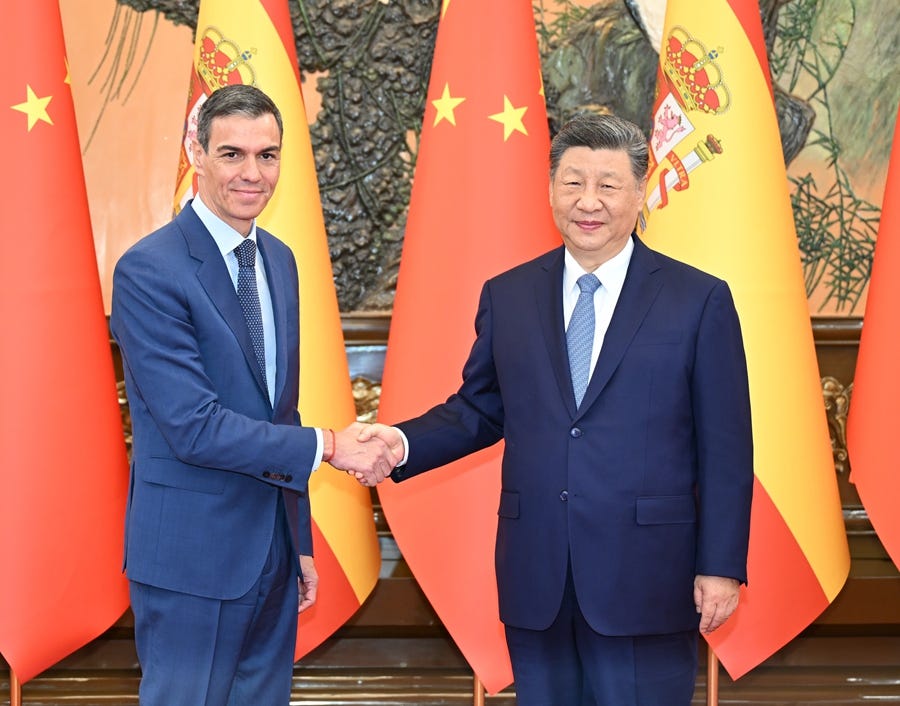
“Ni Hao!” Standing at the podium of Tsinghua University, Spanish Prime Minister Pedro Sánchez opened his speech with this Chinese greeting. During his twenty-minute address, he repeatedly referenced a world map brought to China in 1583 by the Italian missionary Matteo Ricci. While technically precise and rich in detail, that map was Eurocentric, relegating Asia to the periphery—a clear bias in perspective.
From April 11 to 15, Sánchez conducted a five-day official visit to China, his fourth in four years. During his stay, he explored Beijing’s cultural landmarks, including the Drum Tower and the Summer Palace, met with President Xi Jinping and other top leaders, visited two of China’s elite universities, and toured the Xiaomi Science and Technology Park, where he experienced Xiaomi’s latest smartphones, electric vehicles, and AI glasses. His visit generated significant buzz on Chinese social media. His previous stances on Middle Eastern issues—specifically his willingness to say “no” to the United States—had already bolstered his popularity. Now, footage of his travels captured by onlookers has gone viral on short-video platforms. Chinese netizens have dubbed the tall, athletic Prime Minister “dashing,” turning him into something of a digital icon.
Correcting the Coordinates: From Periphery to Center
The metaphor of Ricci’s map introduced by Sánchez has become a focal point for Chinese media. Historians often marvel at Ricci’s adaptability: when the Jesuit missionary realized his Eurocentric map clashed with the worldview of the “Middle Kingdom,” he collaborated with Ming official Li Zhizao to create the Kunyu Wanguo Quantu (A Map of the Myriad Countries of the World). By shifting the prime meridian 170 degrees to the left, he placed China at the center of the world
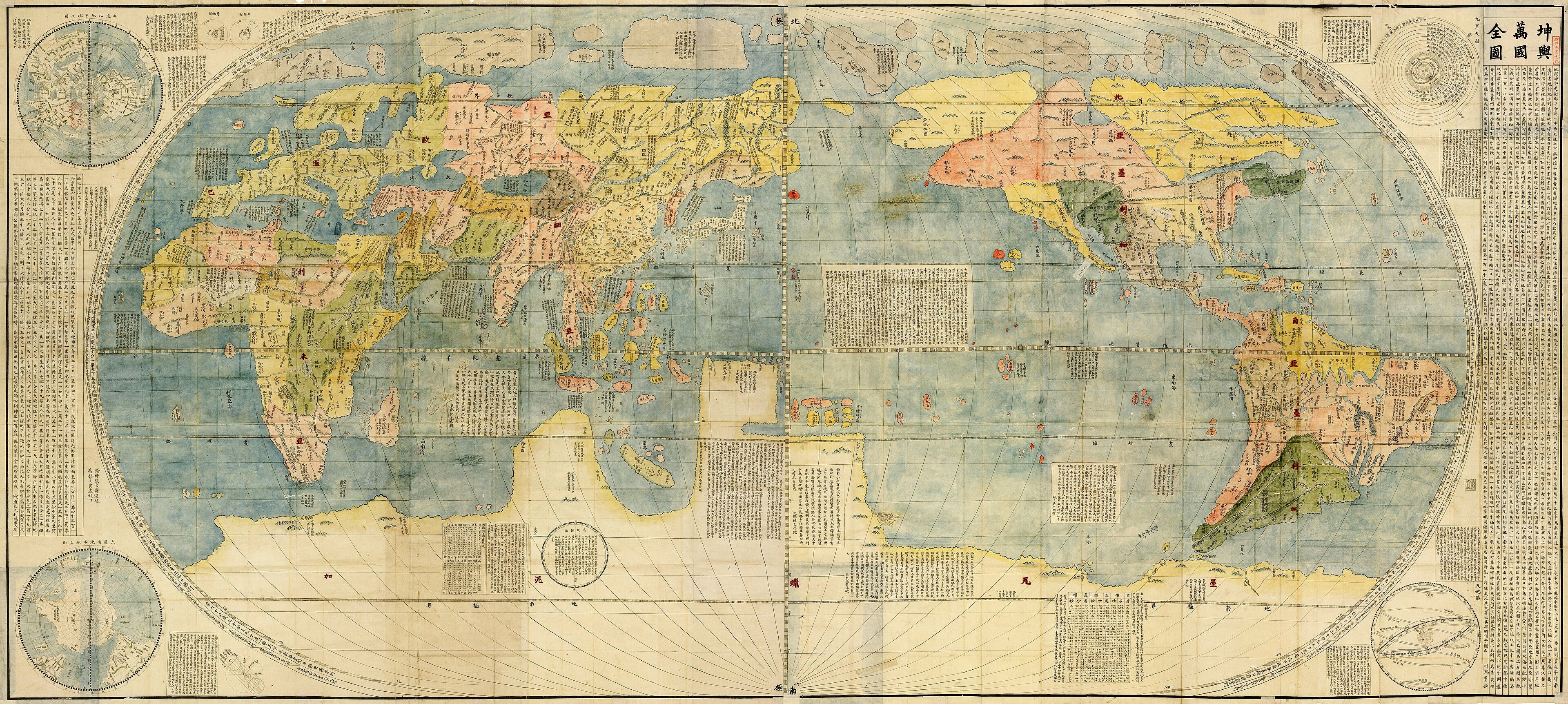
This 400-year-old “cartographic correction” finds a modern echo between Madrid and Beijing. During his visit, Sánchez remarked that even today, some still view the world through that same “distorted map.” In an era of accelerating multipolarity, refusing to see Asia as a periphery is not just a geographical acknowledgment, but an act of strategic self-reflection.
Sánchez’s metaphor is more than a historical retrospective; it is a profound geopolitical allegory. It traces the journey from an era of “perceptual bias”—where Europe was the center and Asia the edge—to a present where both nations seek new coordinates in a turbulent international order. A redrawing of “strategic resolve” is quietly underway.
A Crisis of Order: Moral Consensus Amidst “Collapse of Rites”
In the early spring of Beijing, the talks between the two sides touched upon deeper anxieties. The Chinese side invoked the idiom “Li Beng Yue Huai” (the collapse of rites and music). Originating from the Spring and Autumn and Warring States periods (770 BC–221 BC), this term describes the disintegration of social ethics and order—a description that strikes a chord with the current global state of affairs.
From Venezuela to Iran, the proliferation of unilateralism and the weaponization of sanctions are viewed as the squeezing of justice by raw power. Here, China and Spain reached a subtle moral consensus: in an age where the “law of the jungle” threatens to return, defending the UN-centered international system is no longer a mere formality, but a sovereign responsibility toward global order.
Official Chinese statements described this consensus as “jointly answering the questions of our time.” According to the press release, President Xi Jinping noted that how a country treats international law and order reflects its worldview, values, and sense of responsibility. Both China and Spain are principled, moral nations that wish to stand on the right side of history, jointly defending true multilateralism and opposing a retreat into the law of the jungle.
In response, Spain expressed its desire for close communication and coordination with China to uphold international law and address global challenges. Spain’s embrace of multipolarity is, in essence, an attempt to revise the “obsolete map” dominated by a few superpowers.
Industrial Transformation: From “Pure Trade” to “Tech Sharing”
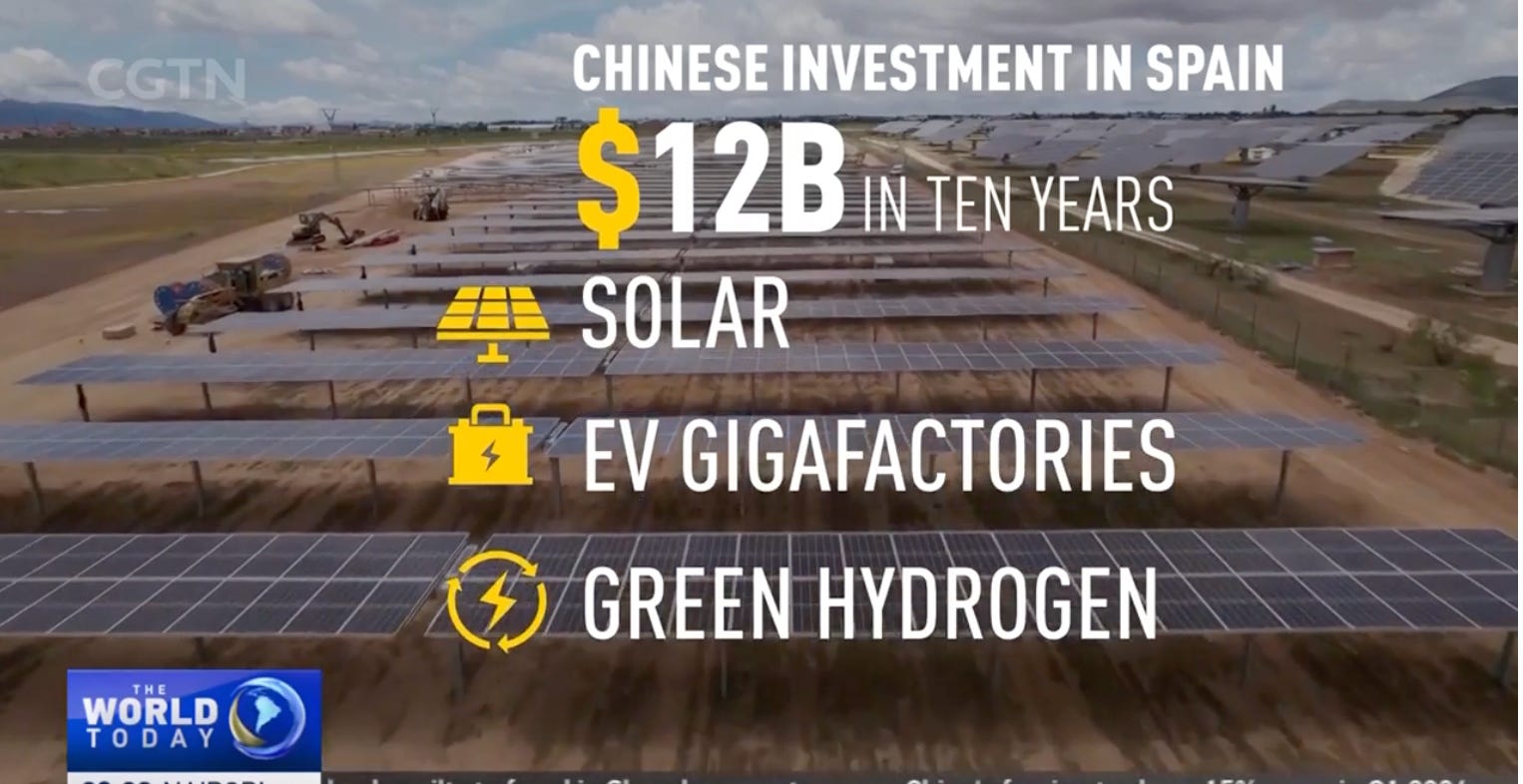
If diplomatic rhetoric provides the latitude and longitude of the map, industrial cooperation represents the actual cultivation of the land. Under the shadow of EU tariffs on Chinese electric vehicles, Sánchez’s visit carried a strong sense of “risk hedging.” Spain’s ambition is clear: it is no longer content to be a mere destination for Chinese exports. Madrid seeks “technology sharing rather than simple imports,” and Chinese companies are responding with tangible investment:
Reshaping Capacity: Chery Automobile took over and renovated the former Nissan plant in Barcelona. This partnership will create an EV production hub with an annual capacity of 150,000 vehicles, directly generating 1,250 jobs and serving as a benchmark for industrial transformation.
Upstream Layout: Envision Energy is building Europe’s first LFP (Lithium Iron Phosphate) battery gigafactory in Extremadura, while CATL is partnering with Stellantis to build a battery plant in Aragon. These investments fill a void in Spain’s manufacturing of core battery components, propelling the country to the forefront of Europe’s green transition.
Market Competence: Consumer choice is the ultimate proof. Statistics show that 2025 marked a historic turning point for Chinese cars in Spain, with their market share surpassing 10% for the first time. Sánchez’s personal test drive of the Xiaomi SU7 was interpreted by observers as an official endorsement of the competitiveness of China’s high-end manufacturing.
“Strategic Resolve”: Stability in an Era of Uncertainty
