
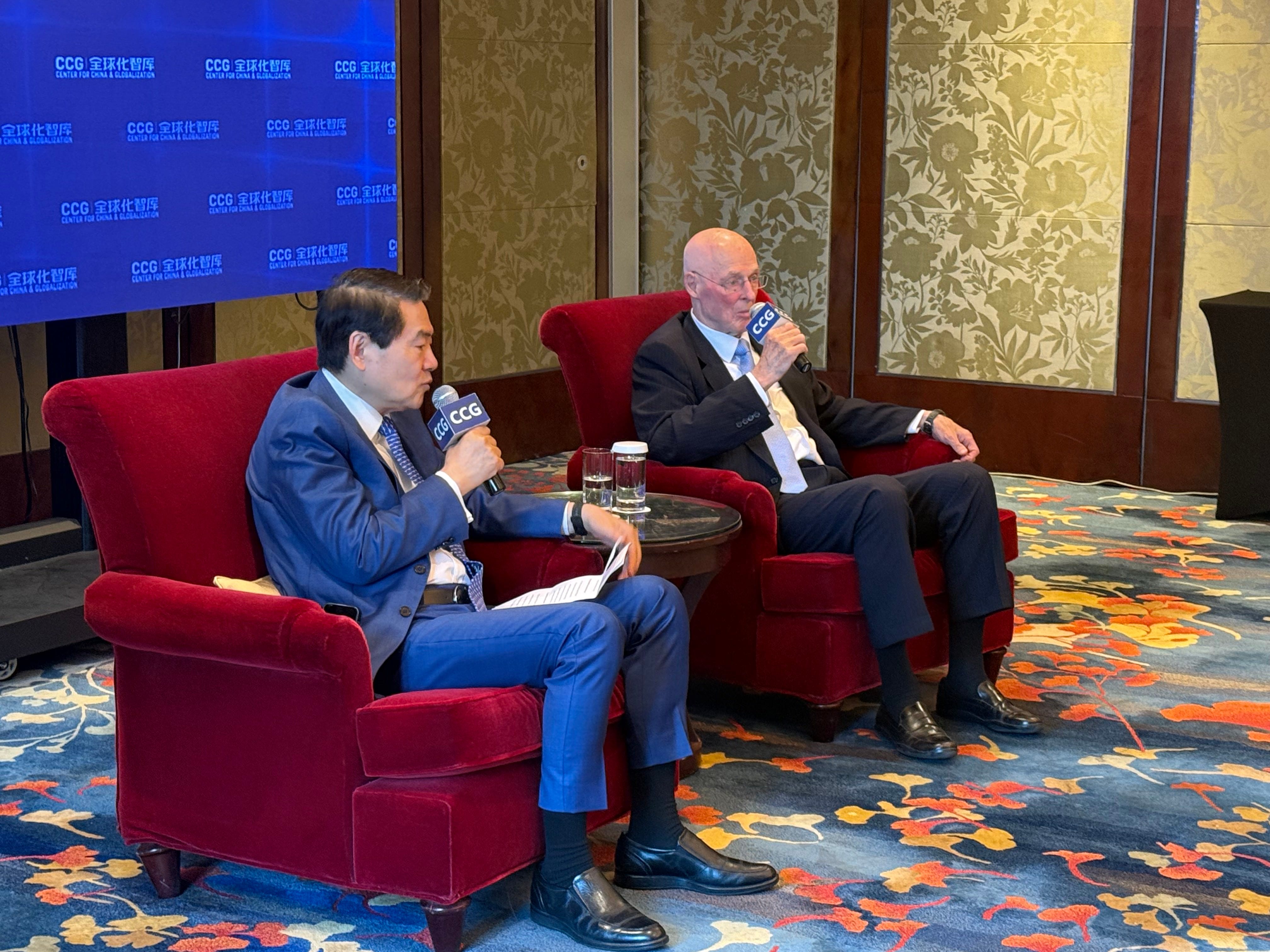
In a recent comprehensive assessment of Sino-US relations at an event in Beijing, former US Treasury Secretary Henry Paulson offered a pragmatic look at the world’s most consequential bilateral relationship. Speaking on the intricate ties between the two global powers, Paulson highlighted that while recent high-level dialogues have fostered a degree of “managed stability,” the relationship is fundamentally anchored by a state of “mutually assured economic disruption”. Both nations are acutely aware of their capacity to disrupt one another, but according to Paulson, the most critical hurdle to overcome is not the much-discussed trade deficit, but rather a profound “trust deficit”.
Here are the primary insights and takeaways from his recent remarks:
The Geopolitical and Financial High-Wire Act
Mitigating Future Crises: Paulson warned that there is a relatively high probability of future global financial disruptions. With global sovereign debt at elevated levels, the international community has significantly less flexibility to manage an economic crisis. Consequently, maintaining open lines of communication between US and Chinese economic monitors is vital; whilst talking may not prevent a crisis, pre-established trust is essential to minimise global damage when one occurs.
The Business Imperative: For global CEOs, navigating today’s landscape of geopolitical scrutiny, unpredictable export controls, and sanctions is incredibly complex. However, Paulson offered stark advice to industry leaders: walking away from China is done “at your own peril”. To remain global leaders, companies must understand the Chinese market, which requires a physical presence and ongoing engagement.
Appetite for Investment: Despite the complexities of cross-border national security and economic laws, Paulson observed that China’s foreign direct investment (FDI) is lower than expected for the world’s second-largest economy, signalling a clear need and desire from Beijing to attract foreign capital.
The AI Frontier and Job Disruption
A Dual-Edged Sword: The rapid and largely unconstrained advancement of artificial intelligence presents profound global challenges. While Paulson acknowledged the extraordinary benefits AI brings to various industries, he explicitly warned that the technology will inevitably lead to significant job destruction.
The Need for Joint Governance: Unlike previous industrial revolutions that unfolded over extended periods, the AI revolution is moving at breakneck speed. Paulson suggested that managing this employment disruption and developing effective governance frameworks offers a crucial, albeit difficult, opportunity for the US and China to collaborate.
Environmental Conservation as a ‘Certainty’
Beyond Risk: Distinguishing environmental threats from geopolitical risks, Paulson categorised climate change and biodiversity destruction not as risks, but as absolute “certainties” that no single country can solve alone.
Green Collaboration: Paulson praised China’s significant strides in green technology, specifically highlighting the nation’s progress in electric vehicles (EVs), batteries, solar panels, and the diversification of energy sources.
Ongoing Cooperative Efforts: Through the Paulson Institute’s continued work, cross-border environmental cooperation remains a bright spot. Collaborative successes include mapping and restoring threatened coastal wetlands, developing the first pilot national parks in Yunnan, and advancing green financing principles along the Belt and Road Initiative.
Looking Ahead
While small steps and recent progress have provided a sense of relief to populations in both the US and China, the relationship remains fraught. Ultimately, tackling the defining challenges of our time—from generative AI and pandemic preparedness to global macroeconomic stability and climate change—will depend heavily on the ability of the world’s two largest economies to bridge their trust deficit and work together.
