
🌐 CHINA DECODED
IN THIS ISSUE
The Big Story: ChangXin Memory Technologies (CXMT) hits the STAR Market with a jaw-dropping ¥3.3+ trillion valuation.
Anatomy of the “Hefei Model”: How a ¥220B state capital engine catalyzed an ¥840B tech ecosystem—without a nearby megacity.
The USTC Engine & The Multiplier Effect: The four structural pillars driving Anhui’s surge into China’s top 5 industrial provinces.
Market vs. Statecraft: Why the West critiques China’s subsidy machine while racing to build its own.
The Macro Shift: How political logic officially crushed economic efficiency in global tech.
1. THE BIG STORY: THE MOMENT CHINA’S “PATIENT CAPITAL” CASHED IN
On July 27, 2026, Shanghai’s tech-focused STAR Market witnessed a watershed moment.
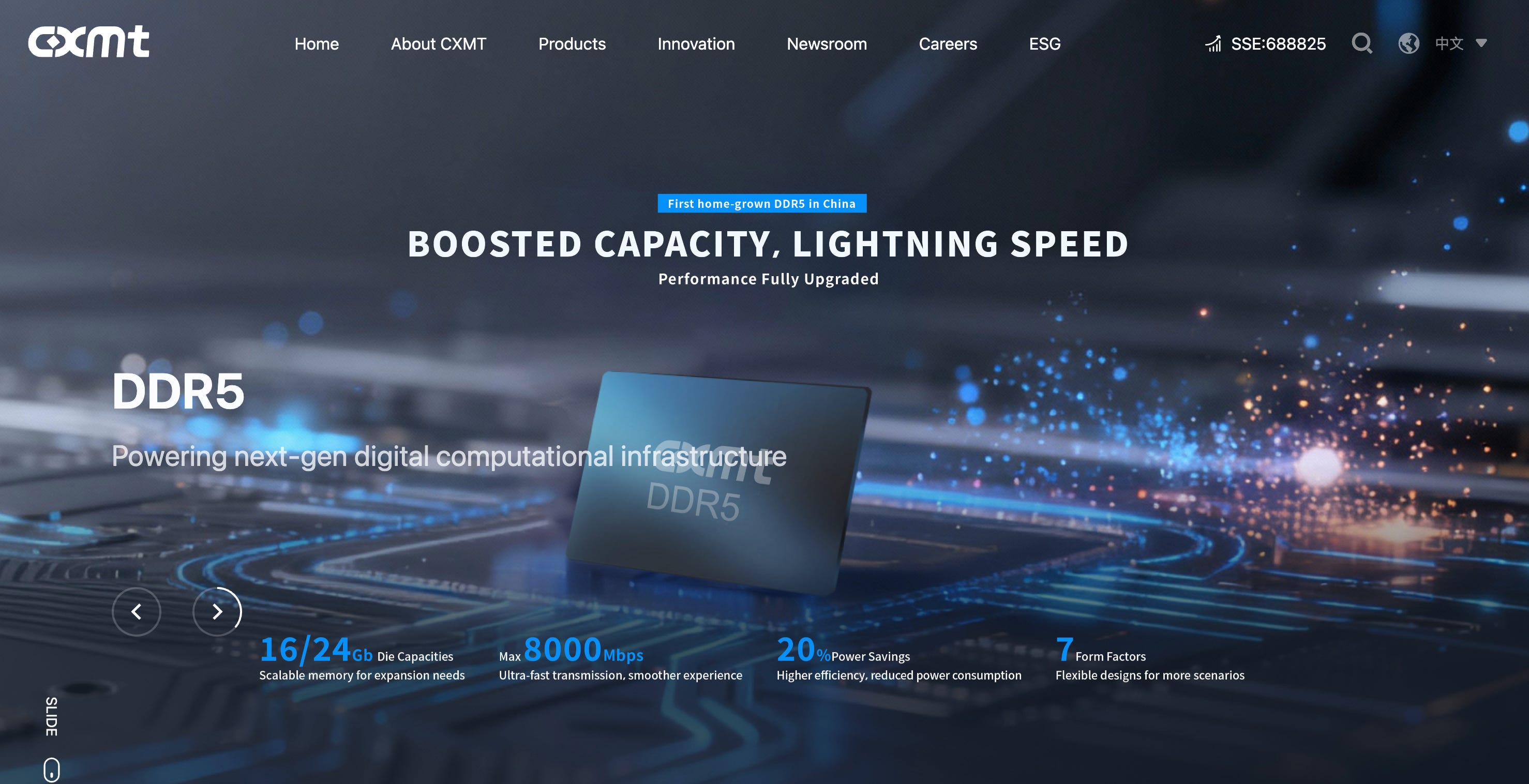
ChangXin Memory Technologies (CXMT, 688825.SH), China’s premier DRAM chipmaker, went public in a historic debut. Within hours of trading, CXMT’s stock skyrocketed, pushing its market capitalization past ¥3.3 trillion ($450+ billion). In a single session, a semiconductor firm that bled cash for nearly a decade unseated traditional titans like ICBC and Kweichow Moutai to become the most valuable listed entity on mainland exchanges.
For Wall Street, it was a staggering valuation for a memory maker still trailing Korea’s SK Hynix and Samsung in advanced node yield. But for Beijing and local leaders in Anhui province, it was something far more important: The ultimate proof of concept for “State VC 2.0.”
2. DEEP DIVE: DECODING THE “HEFEI MODEL” & THE OPEN CAPITAL ECOSYSTEM
To understand CXMT’s record-breaking debut, you have to look 400 kilometers west of Shanghai to Hefei, the capital of Anhui province. Unlike traditional economic hubs in China, Hefei’s rapid rise was not driven by proximity to a major metropolitan area—a fact that makes its playbook particularly compelling for global policymakers.
Beyond CXMT, Hefei’s unique capital ecosystem has nurtured and attracted headquarters for a constellation of tech leaders across new energy vehicles (NEVs), integrated circuits (IC), and advanced displays.
At the core of this “Hefei Miracle” is what economists describe as a “New Capital Supply Model”—a highly engineered open-capital system resting on four strategic pillars:
The Capital Multiplier & Risk Ring-Fencing: By the end of last year, Hefei had used over ¥220 billion in state capital to leverage more than ¥840 billion in total project investment. Hefei avoided touching its immediate annual fiscal budget (which covers public paychecks and hospitals). Instead, it built a combination punch: seed capital from municipal SOE profits, government-guided funds of funds, and ultra-low-interest syndicated loans from state policy banks.
The USTC Innovation Anchor: Hefei’s tech clout stems significantly from the presence of the University of Science and Technology of China (USTC). From quantum computing and advanced materials to the EAST superconducting tokamak (”Artificial Sun”), USTC serves as a non-stop engine providing fundamental research breakthroughs and top-tier engineering talent.
“Shareholders, Not Bosses”: State platforms act as tactical “de-riskers” and ecosystem builders, voluntarily surrendering voting rights and operational control to professional management teams like CXMT Chairman Zhu Yiming.
Long-Term Planning & Business Environment: As Anhui’s Executive Vice Governor Wang Dongwei noted, combining long-term industrial planning, an optimized business environment, efficient fiscal support, and targeted investment attraction creates a self-sustaining loop of investment, employment, and tax revenue growth. Over the past five years, this framework helped propel Anhui’s annual industrial revenue from ¥3.8 trillion to ¥5.9 trillion (jumping from 10th to 5th nationwide). In Q1 this year, Hefei led China’s top 30 cities with a 6.8% YoY GDP growth rate.
