
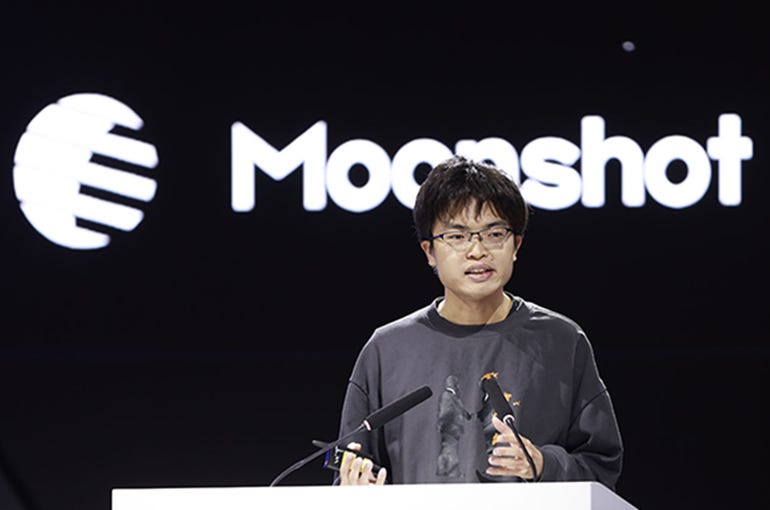
Three days ago, a Beijing-based AI startup did something that Silicon Valley has been dreading but refusing to acknowledge as inevitable. Moonshot AI—the company named after humanity’s most audacious technological ambitions—unveiled Kimi K3, a 2.8-trillion-parameter behemoth that doesn’t just challenge the dominance of American AI labs. It fundamentally redefines what “open source” means in the age of frontier intelligence.
And if you’re still thinking of Chinese AI as a follower playing catch-up, K3 is your wake-up call.
The Numbers That Matter
Let’s get the headline figures out of the way because they’re staggering. Kimi K3 ships with 2.8 trillion total parameters, making it the largest openly announced AI model on the planet. It processes up to one million tokens in a single context window—enough to ingest the entire codebase of a mid-sized software project, a 700-page novel, or three years of Slack messages—and it does so with native visual understanding, meaning it can reason across text, images, and code simultaneously.
But here’s the kicker: Moonshot isn’t keeping this locked behind a corporate API. The company has committed to releasing the full model weights under a Modified MIT license by July 27, 2026. That’s not “open” in the way OpenAI uses the word. That’s actually open. You can download it. You can fine-tune it. You can run it on your own hardware (if you have enough GPUs, which, admittedly, is a big if).
The architecture is a Mixture-of-Experts design, but Moonshot has refined it with two proprietary innovations: Kimi Delta Attention (KDA), a hybrid linear-attention mechanism that keeps inference efficient even at massive scale, and Attention Residuals, which improves how the model scales information across its enormous parameter count. The result? Only about 50 billion parameters are active per token, making the compute requirements manageable enough that the model is actually usable, not just theoretically impressive.
The Benchmark That Broke the Internet
On the Artificial Analysis Intelligence Index—an independent benchmark that measures real-world capability rather than marketing hype—Kimi K3 scored 57. That places it third globally at launch, behind only Anthropic’s Fable 5 and OpenAI’s GPT-5.6 Sol. It outperforms GPT-5.5 and Claude Opus 4.8.
Let that sink in. An open-weight model—one you can download and modify—is now competitive with the most closely guarded proprietary systems in the world.
But the most telling result isn’t the overall score. It’s what happened on nextjs.org/evals, a comprehensive web engineering benchmark. Kimi K3 ranked first. Not just first among open models. First, period. Above Fable 5. Above every proprietary system. As Anastasios Angelopoulos, CEO of Arena (the organization behind the benchmark), put it: “This may be the single biggest release of the year, and marks the moment that [open-source software] Chinese models have surpassed U.S. models.”
This isn’t a narrow victory in a niche category. This is a generalist frontier model beating specialized proprietary systems at their own game.
The Real Innovation: Building for Agents, Not Chatbots
What makes K3 genuinely different from the parade of “bigger is better” model releases is its design philosophy. Moonshot didn’t build a chatbot. They built a worker.
K3 is explicitly architected for “long-horizon software development”—the kind of multi-step, multi-day tasks that require an AI to plan, execute, use tools, monitor its own progress, and course-correct when things go wrong. It can analyze entire software repositories, manage terminal-based tools, and sustain coherent reasoning across extended task chains.
This aligns with Moonshot’s broader product strategy. In June, the company launched Kimi Work with “Goal Mode,” a feature that allows its desktop AI agent to operate continuously until a task is complete—potentially running for hours or days with minimal human intervention. K3 is the brain behind that body.
The industry has been talking about “agentic AI” for years. Moonshot is actually shipping it.
The Pricing Reality Check
Let’s talk money because in the AI world, capability without affordability is just a press release.
K3’s API pricing sits at $3 per million input tokens and $15 per million output tokens. That’s premium territory—roughly double GLM-5.2’s rates and comparable to Anthropic’s pricing. Cache hits drop to $0.30 per million tokens, which helps for repetitive workflows.
Is it expensive? Yes, relative to some competitors. But consider the alternative: GPT-5.6 Sol and Fable 5 aren’t available as open weights at any price. If you’re a startup, a research lab, or a enterprise that doesn’t want to ship your proprietary data to someone else’s API, K3 offers something those models can’t: sovereignty.
The open-weight release scheduled for July 27 changes the economics entirely. Once the weights are public, inference providers will compete to offer the cheapest hosting. Prices will drop. That’s the open-source playbook, and it works.
The Context Nobody’s Talking About
